
How to Choose a Solar Inverter for Your Home
Pick the system type first, then match the inverter to your load, battery voltage and supply phase. A step-by-step guide with UTL examples.
Updated 15 September 2026
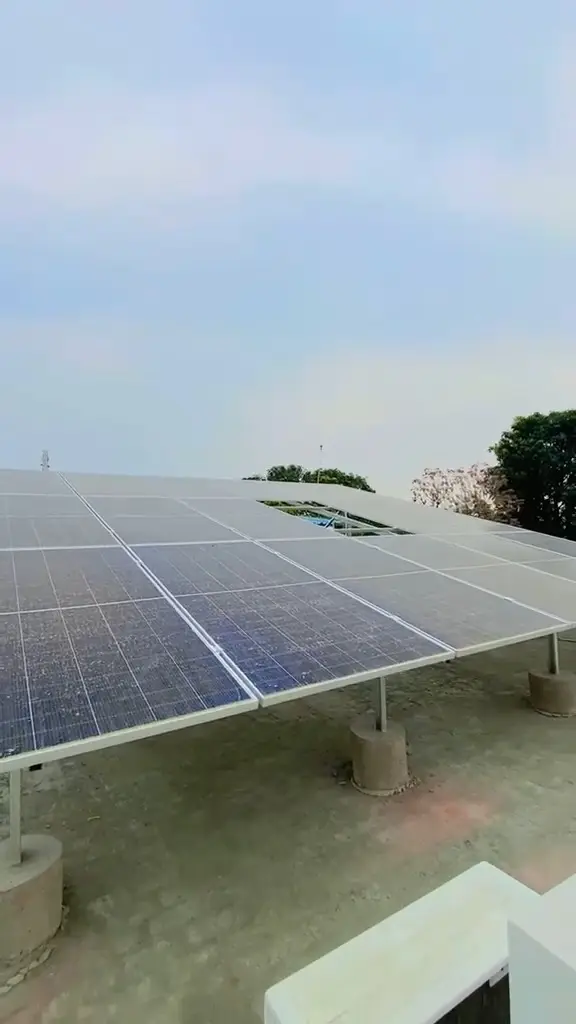
Start with the kind of system, because that decides the kind of inverter. An on-grid system uses a grid-tie string inverter and no batteries. A hybrid system uses a hybrid unit that works with both the grid and a battery bank, and an off-grid system uses a solar inverter or PCU that runs from batteries alone. Capacity, battery voltage and phase come after that.
The three kinds in UTL’s range
| System | Inverter | UTL examples |
|---|---|---|
| On-grid | Grid-tie string inverter, 1.5 kW to 125 kW | 3 kW single phase, 5 kW three phase |
| Hybrid | Grid-export solar PCU with a battery charger | Sigma+ 2 kVA, 48 V, the family used in UTL’s 2, 3 and 5 kW hybrid kits |
| Off-grid | MPPT solar inverter or PCU, battery-based | GAMMA+ 3 kVA, 24 V, plus Heliac, Shamsi and Alfa+ models |
Capacity
For on-grid, match the inverter to the panels. A 3 kW array gets an inverter of about 3 kW, and UTL makes units at 3, 3.3 and 3.6 kW, so there is room to fit the exact array.
For hybrid and off-grid, the inverter’s kVA has to cover everything that runs at the same time during a power cut, plus the brief surge when a fridge, pump or cooler motor starts. Add up what you want to keep running and leave headroom above it. An inverter pushed to its limit every evening trips more often and ages faster.
Battery voltage
The inverter’s battery voltage has to match the bank: 12 V is one battery, 24 V is two, 48 V is four and 96 V is eight. UTL names its models this way, so a Sigma+ 2 kVA/48 V expects four 12 V batteries in series. Bigger systems use 48 V or 96 V because a higher voltage carries the same power at a lower current, with less loss in the cables.
If you want a lithium battery, check that the inverter supports lithium charging. UTL sells lithium-ready versions such as the GAMMA+ 3 kVA/24 V.
Single phase or three phase
Match the inverter to your electricity connection. Most homes have a single-phase supply, while larger homes and most commercial buildings are three phase, which is what UTL’s F3 on-grid models are built for.
MPPT or PWM
An MPPT charge controller, built into UTL’s Sigma+ and Gamma+ units, draws more power from the panels than a PWM controller, especially in heat and weak light. PWM costs less and is fine for a small lighting kit, but on a rooftop system MPPT is worth having.
Warranty and service
UTL’s kit sheets list 5 years on the Sigma inverters in its hybrid kits and 2 years on the Gamma 348 in its 3 kW off-grid kit. Inverter warranties are far shorter than the 25-year panel warranty, so it helps to buy through someone who can handle a claim locally. What an inverter warranty covers explains the fine print.
Questions we are asked
Can I use my existing home inverter with solar panels?
Not directly. A normal home inverter needs a solar charge controller or a solar management unit added before it can take panels, or it can be replaced with a solar inverter. UTL makes solar management units for exactly this conversion.
Is a bigger inverter always better?
No. An inverter far larger than its load costs more and runs less efficiently at light loads. On an on-grid system, size it to your panels; on hybrid and off-grid, size it to your peak running load plus some headroom.
Does the inverter affect the PM Surya Ghar subsidy?
The system has to be grid-connected to qualify, so it needs an on-grid or hybrid inverter. Off-grid systems do not get the subsidy.