
Lithium or Tubular Battery for Solar: Which Should You Buy?
Tubular costs less to buy and suits occasional backup. Lithium lasts about twice the cycles, weighs far less and needs no water. How to choose for your home.
Updated 15 September 2026
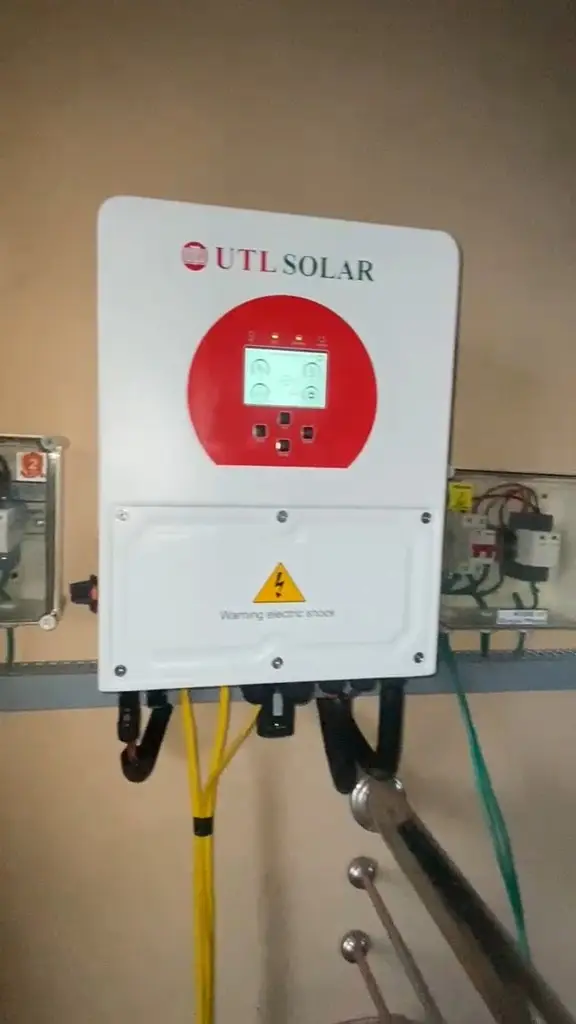
If your solar system uses its batteries every day, go for lithium. If the inverter only has to cover the odd power cut, a tubular battery is still the sensible, cheaper choice. It comes down to how often the battery gets discharged.
Side by side
| Feature | Tubular | Lithium (LiFePO4) |
|---|---|---|
| Rated cycles | 1,500 at 80% depth of discharge (UTL solar tubular) | 3,000 to 3,500 at 80% (UTL 48 V pack) |
| Weight for a 48 V bank | About 230 kg, four UST1560 batteries | About 38 to 42 kg, one 48 V, 100 Ah pack |
| Upkeep | Distilled water top-ups, and a ventilated spot | None; a built-in battery management system handles protection |
| Inverter | Works with inverters set up for lead-acid | The inverter must support lithium charging |
| Price to buy | Lower | Higher |
When tubular is the right choice
- Power cuts are occasional. A battery that sits fully charged most of the week barely uses its cycle life, so paying for extra cycles gets you very little.
- Budget matters more to you than weight. Tubular is the cheaper way to buy a given amount of backup.
- Your inverter only works with lead-acid. Many home inverters are like that, and a new inverter adds to the cost of switching.
- You have floor space. A 48 V tubular bank weighs over 200 kg and needs a solid, ventilated spot.
When lithium pays for itself
- The battery is cycled every day. Hybrid and off-grid systems often discharge each evening, and at one full cycle a day, 1,500 cycles lasts about 4 years while 3,000 lasts about 8.
- Weight or space is a problem. One lithium pack weighs roughly a sixth of the tubular bank it replaces.
- Nobody is going to top up the water. Lithium needs no maintenance.
Check these before you switch
- The inverter has to support lithium. UTL sells lithium-ready versions, such as the GAMMA+ 3 kVA, 24 V.
- The voltages have to match. A 25.6 V pack goes with a 24 V system, and a 48 V or 51.2 V pack with a 48 V system.
- Keep to one chemistry per bank. Don’t mix lithium and lead-acid batteries on the same inverter.
What about SMF batteries?
Sealed maintenance-free (SMF) batteries save you the water top-ups, but they are built for shallow, occasional discharge, as in a UPS. For solar that discharges every day, pick tubular or lithium.
Questions we are asked
Is a lithium battery worth it for a home inverter with rare power cuts?
Usually not. If the battery spends most of the year fully charged, you pay extra for cycle life you never use.
Can I replace my tubular batteries with a lithium battery?
Only if the inverter supports lithium charging, and many older home inverters do not. Send us the inverter model on WhatsApp and we will check it.
How long does a tubular battery last on solar?
That depends on how deeply and how often it is discharged. UTL rates its solar tubular battery at 1,500 cycles at 80% depth of discharge, and shallower daily use stretches it further.