
The Cheapest Way to Get Solar for a Home in Punjab
Cheap solar in Punjab means the smallest system that clears your bill, bought with the subsidy. What that costs by size, and where cutting cost loses you money.
Updated 15 September 2026
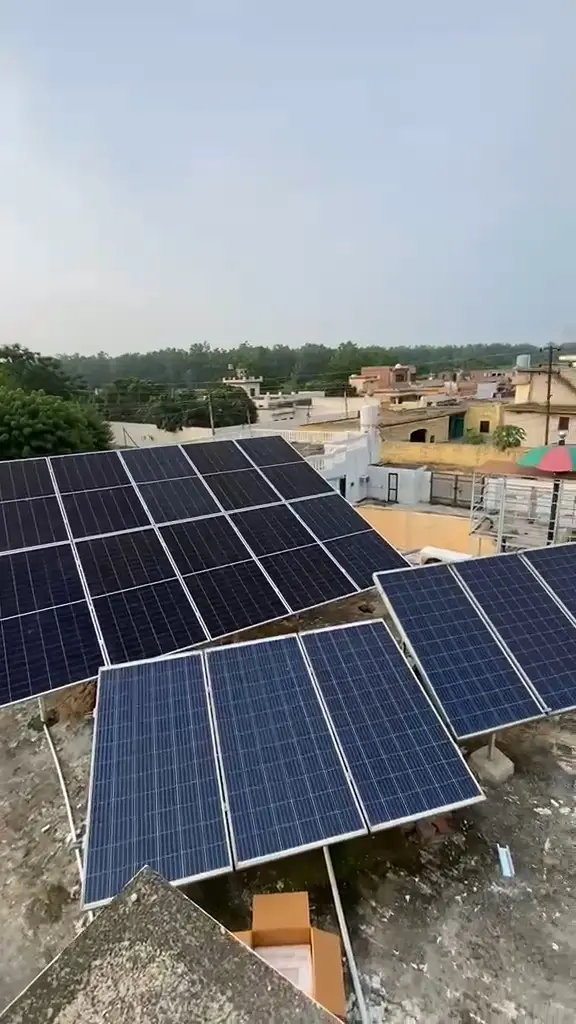
For most homes, the cheapest solar is the smallest on-grid system that brings the bill to zero, installed with the PM Surya Ghar subsidy. In Punjab that is often 3 kW, which comes to ₹1,00,000 to 1,18,000 after the ₹78,000 subsidy. If you use 300 units a month or fewer, the cheapest option is no system at all, because your bill is already zero.
What each size costs after the subsidy
| System | Type | Installed | Subsidy | You pay |
|---|---|---|---|---|
| 1 kW | Off-grid | ₹47,000 to 51,000 | ₹0 | ₹47,000 to 51,000 |
| 1 kW | Hybrid | ₹2,05,000 to 2,25,000 | ₹30,000 | ₹1,75,000 to 1,95,000 |
| 2 kW | Hybrid | ₹2,42,000 to 2,66,000 | ₹60,000 | ₹1,82,000 to 2,06,000 |
| 3 kW | On-grid | ₹1,78,000 to 1,96,000 | ₹78,000 | ₹1,00,000 to 1,18,000 |
| 5 kW | On-grid | ₹2,50,000 to 2,75,000 | ₹78,000 | ₹1,72,000 to 1,97,000 |
Estimated price range. Prices are indicative and subject to change. Contact us for the latest pricing and a customised quotation.
You pay the full installed price first. The subsidy reaches your bank account 30 to 45 days after PSPCL inspects the system, so budget for the whole amount.
Why a bigger system isn’t better value here
Punjab’s free units change the maths. Once solar brings your net use under 300 units a month the bill is zero, and extra panels have nothing left to save. Surplus units sent to the grid are worth far less than the ones you use, so capacity beyond the size that clears your bill mostly adds cost.
Where cutting cost loses you money
- Panels that aren’t DCR and ALMM-listed. The subsidy is only paid when panels meet both rules, so a small saving on panels can cost you up to ₹78,000.
- An inverter that is too small or badly matched. It clips output on good days, and the system never makes the units it was sized for.
- A flimsy mounting structure. The panels carry a 25-year performance warranty, and a structure that rusts or shifts in a storm costs more to redo than it ever saved.
Cheaper routes that do work
- Get the size right first. The calculator finds the smallest system that takes your bill to zero, so you don’t pay for panels you don’t need.
- Spread the cost. A bank solar loan turns the price into instalments; see solar loans in India.
- Go off-grid for small needs. For a farmhouse, a tubewell room or basic backup, a small off-grid kit costs less upfront, though it gets no subsidy.
- Sort out your sanctioned load early. A system can’t be bigger than it, and applying for an increase after quoting delays the job.
Questions we are asked
Is a 1 kW system the cheapest way to go solar?
It has the lowest price, but RSK Solar Energy doesn't install on-grid systems below 3 kW, so a 1 kW system would be hybrid or off-grid. A home using over 300 units a month usually needs 3 kW to clear its bill anyway, and on-grid is the cheapest way to get that.
Are cheap unbranded panels a good way to save?
Not on a subsidised system. The subsidy is only paid for DCR panels on the ALMM list, so a cheaper panel that fails either rule can cost you the whole subsidy.
Can I get the subsidy on an off-grid system?
No. PM Surya Ghar only pays for grid-connected systems. Off-grid is cheaper to buy in small sizes, but it gets no subsidy.