
Why your solar subsidy is not on the invoice
The subsidy is paid to you after inspection, not knocked off the bill. See how to check eligibility and plan cash flow the right way in Punjab.
Updated 13 November 2026

Your rooftop solar invoice will show the full system price. Under PM Surya Ghar the subsidy is paid to you, into your bank, 30 to 45 days after the DISCOM inspection.
The problem
“My installer’s quote does not deduct the subsidy. Friends said the installer will adjust it. Am I being overcharged, or is this how it works in Punjab?”
What is happening and how to read your quote
This is a common worry. Under PM Surya Ghar the subsidy never comes off the invoice and it never goes to a lender or an installer. It is paid into the applicant’s own bank account 30 to 45 days after the DISCOM inspection. If your quote shows the full price, that is correct.
Two things decide if you can claim: the system type and the panels. On-grid and hybrid systems qualify. Off-grid does not. Panels must be DCR and on the ALMM list. If you plan to apply, confirm both points with us before you place the order. You can read the amounts and steps in our Punjab subsidy guide.
Installed price by system size, before subsidy
Estimated price range. Prices are indicative and subject to change. Contact us for the latest pricing and a customised quotation.
Show as a table
| System size | On-grid | Hybrid | Off-grid |
|---|---|---|---|
| 1 kW | Not offered | ₹2,05,000 to 2,25,000 | ₹47,000 to 51,000 |
| 2 kW | Not offered | ₹2,42,000 to 2,66,000 | ₹93,000 to 1,03,000 |
| 3 kW | ₹1,78,000 to 1,96,000 | ₹2,78,000 to 3,06,000 | ₹1,40,000 to 1,54,000 |
| 4 kW | ₹2,14,000 to 2,35,000 | ₹3,17,000 to 3,48,000 | ₹2,05,000 to 2,26,000 |
| 5 kW | ₹2,50,000 to 2,75,000 | ₹3,58,000 to 3,94,000 | ₹2,70,000 to 2,97,000 |
| 6 kW | ₹2,86,000 to 3,15,000 | ₹3,88,000 to 4,27,000 | ₹3,35,000 to 3,69,000 |
| 8 kW | ₹3,58,000 to 3,94,000 | ₹4,66,000 to 5,12,000 | ₹4,65,000 to 5,12,000 |
| 10 kW | ₹4,30,000 to 4,73,000 | ₹5,40,000 to 5,94,000 | ₹5,95,000 to 6,55,000 |
What the subsidy amounts mean for common sizes
The scheme pays ₹30,000 per kW for the first 2 kW and ₹18,000 for the third, capped at ₹78,000. Here is what that means in practice.
| System size | Eligible system types | Panel requirement | Subsidy amount by rule |
|---|---|---|---|
| 3 kW | On-grid or hybrid | DCR and on ALMM | ₹30,000 + ₹30,000 + ₹18,000 = ₹78,000 (cap reached) |
| 5 kW | On-grid or hybrid | DCR and on ALMM | ₹78,000 (cap reached) |
Every generation or saving figure you see in planning is an estimate that depends on roof, shade, dust and weather. If you would like to compare sizes on output, use the calculator and see our notes on panel technology and mono PERC and half-cut.
What to do
- Keep the invoice at the full quoted amount. The subsidy is separate.
- Confirm your system type is on-grid or hybrid, not off-grid.
- Confirm your panels are DCR and on the ALMM list.
- Apply and schedule inspection as per the steps in our Punjab subsidy guide.
- Plan cash flow so you can pay the invoice now and receive the subsidy 30 to 45 days after inspection.
Picking the right system type when subsidy is a factor
Price and eligibility move together. On-grid costs less than hybrid at the same size. Hybrid always costs more because of the battery and hybrid inverter. Both qualify for the subsidy if panels are DCR and on ALMM. Off-grid does not qualify.
| If subsidy matters to you | On-grid system | Hybrid system with battery |
|---|---|---|
| Eligibility | Qualifies with DCR + ALMM | Qualifies with DCR + ALMM |
| Relative price at same size | Less than hybrid | Always more than on-grid |
| Why choose | You want the lowest installed cost per kW | You need backup for power cuts and are ready for higher upfront cost |
If you want ballpark prices to plan cash, our on-grid installed estimates before subsidy are: 3 kW ₹1,78,000 to ₹1,95,800 and 5 kW ₹2,50,000 to ₹2,75,000. Every price we publish is a range and is an estimate. Size pages are here: 3 kW, 5 kW, and you can browse systems, panels, and inverters.
How to plan sizing and paperwork without guesswork
- Check space and load caps. Plan about 100 sq ft of shade-free roof per kW, and remember a rooftop system can be at most 100 percent of your sanctioned load. If you are unsure where you stand, we explain the cap in our note on sanctioned load.
- Estimate output for your roof. We plan on about 135 units a month from each kW in Punjab across the year. With TOPCon panels, output can reach up to about 180 units per kW in the sunniest months. In December and January fog, plan on about 75 percent of the average. All of these are estimates that depend on roof, shade, dust and weather.
- Match type to need. On-grid for lowest installed cost per kW. Hybrid if you need backup. If backup is the draw, see our hybrid guide and the specific case of running two ACs.
- Keep the subsidy separate from price talks. The installer’s job is to build the system to spec and complete the net metering steps. The subsidy is paid to you 30 to 45 days after the DISCOM inspection.
A different way to see it
Treat the subsidy as reimbursement that follows the inspection, not as a discount at purchase. When you plan it this way, your choice between on-grid and hybrid, and your size decision, stay grounded in roof space, sanctioned load and how you use power, not in a line item that is paid later.
What we handle on site
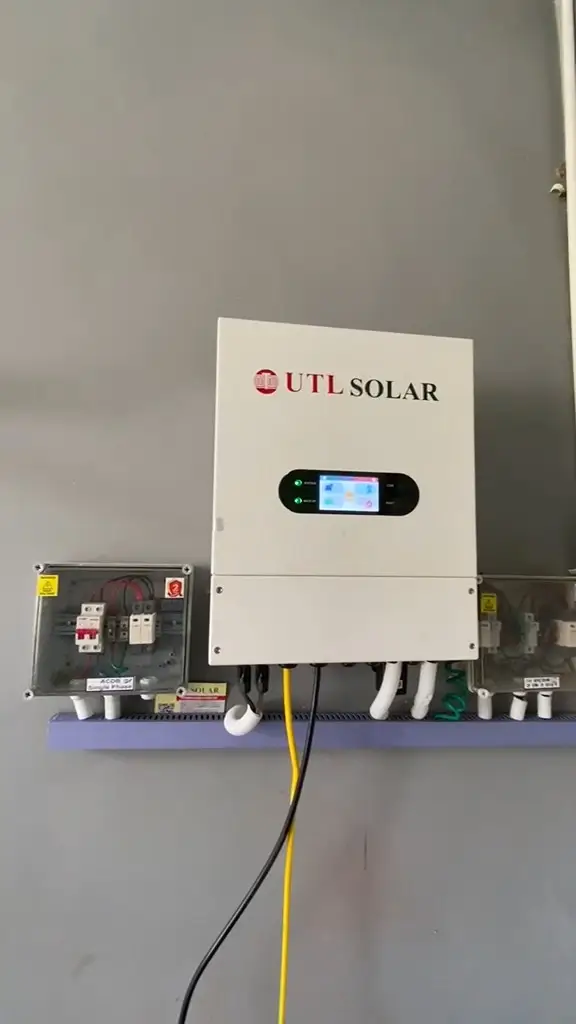
We size from your bills and meter photos, walk the roof for shade, confirm sanctioned load against the cap, and spec DCR panels on ALMM if you plan to claim the subsidy. We install on-grid from 3 kW, and hybrid or off-grid from 1 kW. We are a UTL Solar distributor at Phase 8B, Mohali, since 2022, with our own team in Mohali, Kharar, Zirakpur, Derabassi, Chandigarh, Panchkula, New Chandigarh (Mullanpur), Landran, Banur, Lalru, Naya Gaon, Kurali, Morinda, Ropar, Fatehgarh Sahib, Chamkaur Sahib and Khamanon, and UTL dealers elsewhere in Punjab. Product warranties are the manufacturer’s, on their terms.
If you want us to check eligibility and roof fit before you commit, send your latest bill and a roof photo via contact. You can also compare types at on-grid vs off-grid vs hybrid, explore loan options, or see how to order products if you are looking for supply.
Questions we are asked
Will the PM Surya Ghar subsidy reduce my invoice amount?
No. The subsidy never comes off the invoice. It is paid into the applicant’s own bank account 30 to 45 days after the DISCOM inspection.
When is the subsidy paid and who receives it?
It is paid 30 to 45 days after the DISCOM inspection, to the applicant’s bank account. It never goes to a lender or an installer.
Which systems and panels qualify for the subsidy in Punjab?
On-grid and hybrid systems qualify. Off-grid does not. Panels must be DCR and on the ALMM list.