
When your roof cannot fit 5 kW: size from space and shade
If your terrace feels too small for the system you planned, here is how we right-size from roof area, shade and your bill, with clear next steps.
Updated 27 October 2026
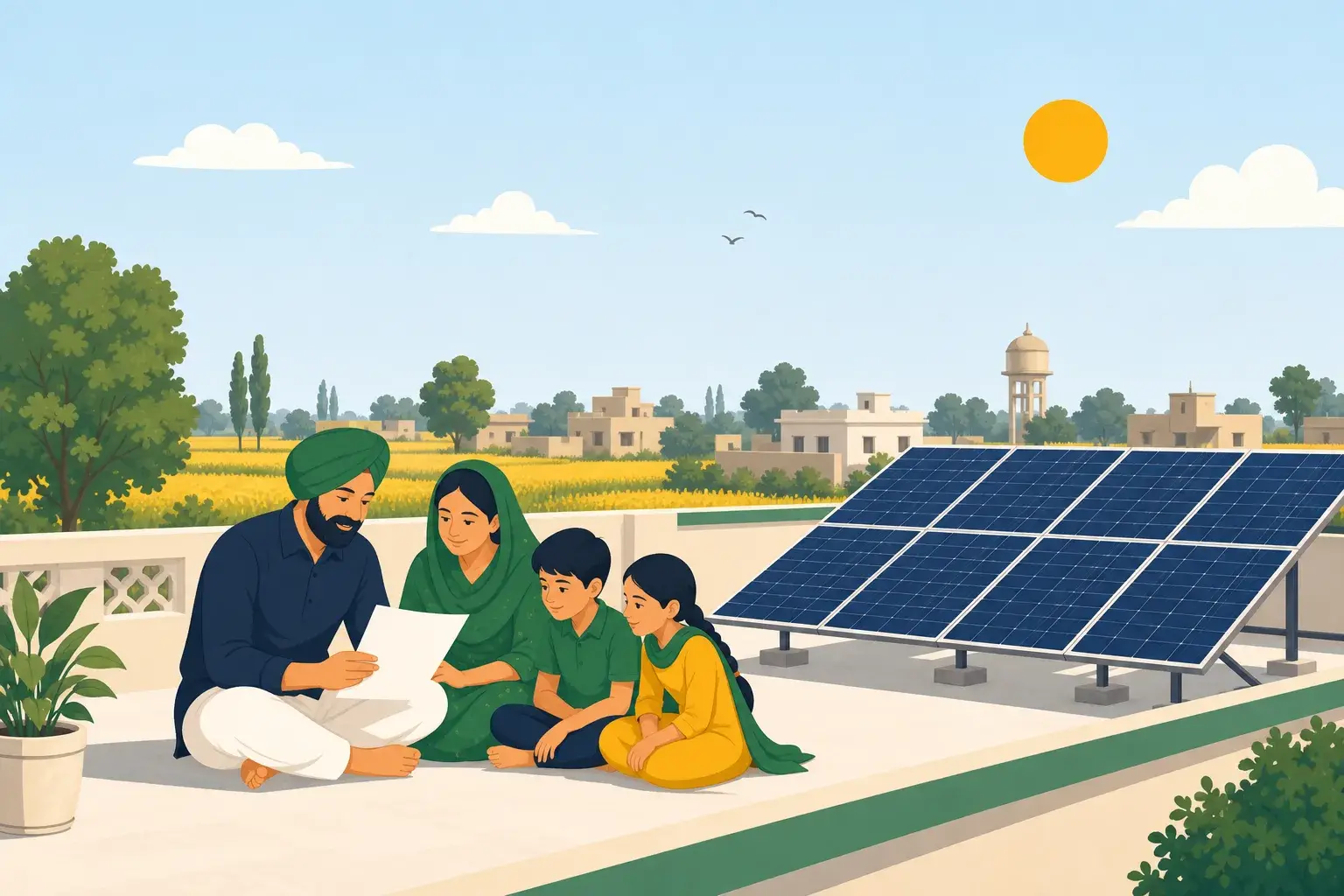
If your terrace cannot take the kW you had in mind, start from the space you do have. We plan about 100 sq ft of shade-free roof per kW, then match that to your bill and sanctioned load.
The problem
I was quoted 5 kW, but my roof is small with tanks and a ladder. The installer says it will not fit. I do not want to overpay for a size that cannot be built, or end up with too few units.
What is limiting the size: area, shade and sanctioned load
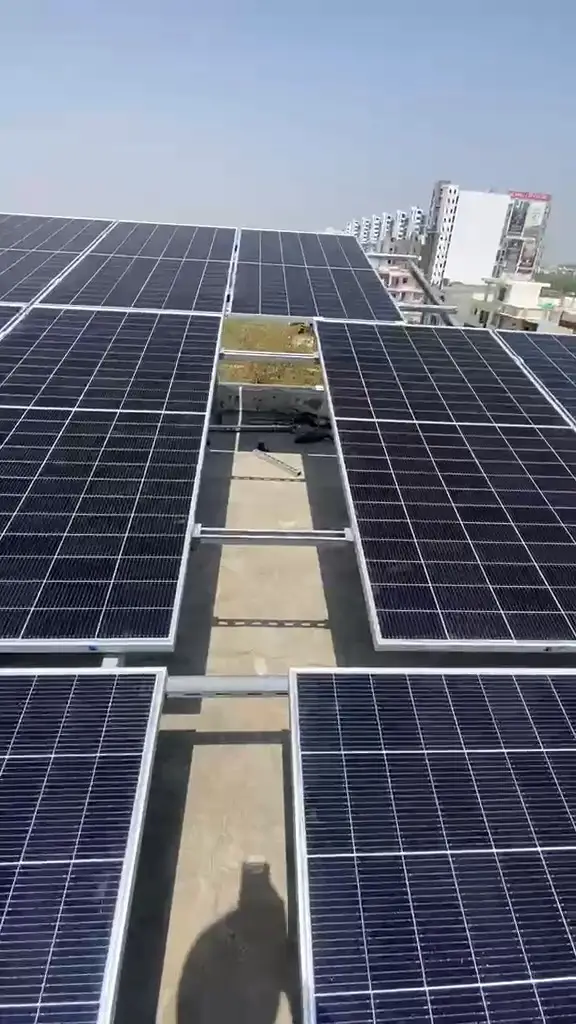
On a typical slab in Punjab, the practical limit is the clear, shade-free area. As a rule of thumb, plan about 100 sq ft per kW. A 3 kW system wants about 300 sq ft clear. A 5 kW system wants about 500 sq ft clear. That area must sit away from walls, parapets, trees, dish antennas and overhead lines that cast shade at different times of day.
Shade and dust cut output. Heat and winter fog also reduce what you will see. Our planning generation figure is an estimate that depends on roof, shade, dust and weather: about 135 units a month from each kW across the year in Punjab. With TOPCon panels, output can reach up to about 180 units per kW in the sunniest months, but we do not size a system on those months. In December and January fog, plan on about 75% of the average.
There is also a paperwork cap. A rooftop system can be at most 100% of the sanctioned load. If your sanctioned load is smaller than the array you want, we size to that cap. For how that affects approvals, see our note on sanctioned load.
How we right-size when the roof feels too small
Here is the exact plan we follow on site in Mohali and nearby towns.
- Measure the usable roof. We sketch the slab, mark tanks, stairs, and clear setbacks, then calculate shade-free blocks.
- Check shade across the day. We look for morning and evening shadows from nearby trees and taller buildings, not just noon.
- Fit the array to the clear blocks. If needed, we split strings across two blocks with the same tilt and orientation.
- Match size to your bill. We size from paid units above Punjab’s 300 free units a month, using our solar calculator so daytime self-use is counted first.
- Confirm the paperwork cap. We keep the array at or below 100% of your sanctioned load.
- Choose the type. On-grid costs less than hybrid at the same size. Hybrid adds a battery so it costs more. Off-grid is a different design and does not qualify for the subsidy. See on-grid vs off-grid vs hybrid.
- Pick panels and inverter. We spec DCR, ALMM-listed panels if you will apply for the subsidy, and an on-grid or hybrid inverter from our products range.
What a smaller array can still do
The units your home uses as they are made are the ones worth most, because they replace units you would have bought. Whatever your system exports is settled under PSPCL’s net metering rules, and our calculations give export no value at all. That is why even a smaller, well-sited array can pull down the paid part of your bill in the daytime hours you use most.
If your paid units sit near Punjab’s free-units line, a right-sized 3 kW on-grid system may make sense. The installed price range we see in Mohali for 3 kW on-grid is ₹1,78,000 to ₹1,95,800 before subsidy. For 5 kW on-grid it is ₹2,50,000 to ₹2,75,000 before subsidy. Every price on our site is an estimate. For what drives those ranges, see our pages for 3 kW and 5 kW, and the notes on what decides a panel’s price.
Options when space or shade limits the build
Here are three safe paths we discuss on site.
| Option | When it makes sense | What to consider |
|---|---|---|
| Build the smaller on-grid array now | Usable area only fits 3 kW | About 100 sq ft per kW clear. Plan about 135 units a month per kW as an estimate. |
| Use higher-wattage, DCR ALMM panels | You are applying for the subsidy and want more watts per panel count | Panel dimensions still need setbacks. We do not size from sunniest-month peaks. |
| Step up to hybrid only if you need backup | You want some backup during cuts on a limited roof | Hybrid costs more than on-grid at the same size because of the battery and hybrid inverter. |
If you are curious about panel tech tradeoffs on rooftops with tight space, see our notes on TOPCon panels and bifacial panels. We match the module to your structure and shade, and for subsidy jobs we spec DCR, ALMM-listed modules as required in the subsidy guide.
A different way to see it
Most people try to force the kW they first heard from a friend onto their roof. A better starting point is your usable, shade-free area and the paid units on your bill. When you size from space and self-use first, the system works harder in the hours that matter, and you avoid paying for kW you cannot place or use.
What the subsidy changes, and what it does not
On-grid and hybrid systems qualify for PM Surya Ghar if you use DCR, ALMM-listed panels. Off-grid does not. The current amounts are ₹30,000 per kW for the first 2 kW and ₹18,000 for the third, capped at ₹78,000. The subsidy is paid into your own bank account 30 to 45 days after the DISCOM inspection. It never comes off our invoice, and it never goes to a lender or an installer. For steps and documents, follow our subsidy page.
What to do this week
What to do
- Measure and sketch your terrace, marking all obstructions.
- Walk the roof at 9 am, noon and 4 pm to spot shade.
- Send us the sketch and your last two bills from our contact page, or try the solar calculator.
- Check your sanctioned load on the bill.
- Decide on on-grid or hybrid from this guide.
- Shortlist panels and inverter from our products, making sure panels are DCR and ALMM-listed if you will apply for the subsidy.
When we visit, we bring a tape, a shade check, and your bill history. We size from your real roof and your paid units, then quote a range with the exact make and model of panels, inverters and batteries we can install on that roof. After you approve the layout, we set the mounting structure to clear the obstacles you have, and leave you with a clean path for net metering.
Questions we are asked
My terrace is small. How do I know what size will fit?
Plan about 100 sq ft of shade-free roof per kW. We measure usable area, check shade, then size the array and inverter from that and your bill using our calculator.
Will a smaller system still help if my bill is under 300 units?
Punjab gives homes 300 free units a month. If you stay at or below that, your bill is already zero. We size to your paid units above that line.
Can I apply for the subsidy if my roof only fits 3 kW?
Yes for on-grid and hybrid systems with DCR, ALMM-listed panels. The subsidy is paid into your bank 30 to 45 days after inspection, and it never comes off our invoice.