
Why a solar quote should be a range and what moves it
What affects a rooftop solar quote in Punjab and how we size and price it.
Updated 24 October 2026
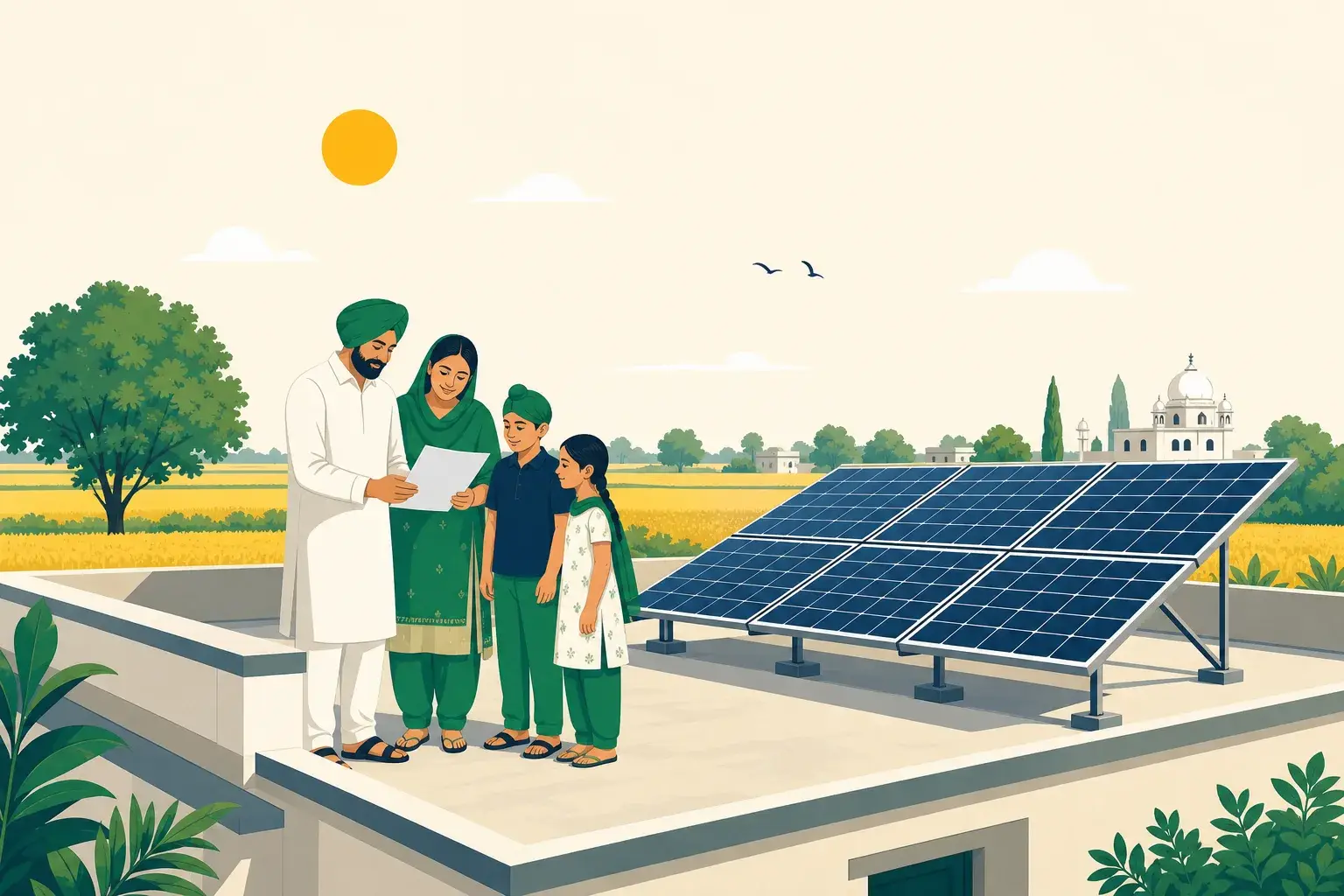
A solar quote should be a range because real roofs and real choices move the cost. Here is what shifts a Punjab rooftop quote up or down, and what you can check before you ask us.
The problem
“I got two quotes for 5 kW. One is far cheaper. Which one is right, and what will the final bill be after subsidy and net metering?” That is what we hear most. The worry is paying more than you should, or buying a system that is not sized or specced right for your home.
Why quotes start as a range
A rooftop system has parts you see, and parts you do not. Both change with your site.
- Size drives almost everything. We plan about 135 units a month per kW in Punjab across the year. It is an estimate and depends on the roof, shade, dust and weather.
- Roof access and structure decide mounting and labour. A flat slab with room is one job. A tight slope with parapets, longer cable runs and no parking for a day is another.
- Type matters. Hybrid with a battery always costs more than on-grid at the same size because of the battery and the hybrid inverter. Off-grid is priced on a different basis and is not comparable size for size.
- Parts choices vary. DCR and ALMM panels are required for the PM Surya Ghar subsidy. Panel technology and inverter brand options are in our ranges and on our panels and inverters pages.
- Paperwork and limits set the cap. Your rooftop size and your sanctioned load both cap system size. A rooftop system can be at most 100 percent of the sanctioned load.
Our installed price estimates before subsidy are ranges by design: 3 kW on-grid ₹1,78,000 to ₹1,95,800, and 5 kW on-grid ₹2,50,000 to ₹2,75,000. Every price on our site is an estimate until the site is checked.
Installed price by system size, before subsidy
Estimated price range. Prices are indicative and subject to change. Contact us for the latest pricing and a customised quotation.
Show as a table
| System size | On-grid | Hybrid | Off-grid |
|---|---|---|---|
| 1 kW | Not offered | ₹2,05,000 to 2,25,000 | ₹47,000 to 51,000 |
| 2 kW | Not offered | ₹2,42,000 to 2,66,000 | ₹93,000 to 1,03,000 |
| 3 kW | ₹1,78,000 to 1,96,000 | ₹2,78,000 to 3,06,000 | ₹1,40,000 to 1,54,000 |
| 4 kW | ₹2,14,000 to 2,35,000 | ₹3,17,000 to 3,48,000 | ₹2,05,000 to 2,26,000 |
| 5 kW | ₹2,50,000 to 2,75,000 | ₹3,58,000 to 3,94,000 | ₹2,70,000 to 2,97,000 |
| 6 kW | ₹2,86,000 to 3,15,000 | ₹3,88,000 to 4,27,000 | ₹3,35,000 to 3,69,000 |
| 8 kW | ₹3,58,000 to 3,94,000 | ₹4,66,000 to 5,12,000 | ₹4,65,000 to 5,12,000 |
| 10 kW | ₹4,30,000 to 4,73,000 | ₹5,40,000 to 5,94,000 | ₹5,95,000 to 6,55,000 |
What moves a quote up or down
Here is what we look at on a visit, and why it changes the number you see on paper:
- Roof and structure
- Clear, shade-free area: plan about 100 sq ft per kW. If panels need a higher structure to clear shade, steel goes up.
- Access: easy lift or narrow stair. Extra handling changes labour.
- Cable distance from array to inverter to meter. Longer runs need more cable and conduit.
- System type and size
- On-grid or hybrid. Hybrid adds the battery and a hybrid inverter, so it prices higher at every size. See our on-grid vs off-grid vs hybrid guide.
- Size you actually need. If your home sits near Punjab’s 300 free units a month, there may be nothing to save at small sizes. Read our note on this in 3 kW or 5 kW near the free-units line.
- Panels and compliance
- DCR and ALMM-listed panels are required for the PM Surya Ghar subsidy. See DCR vs non-DCR.
- Panel wattage and technology are options, and we size to your roof. For technology basics see mono PERC and half-cut and TOPCon.
- Paperwork and metering
- Sanctioned load caps system size. If you need a bigger system than your cap allows, we will point you to the guide and next steps in sanctioned load and rooftop solar size.
- Net metering is under PSPCL’s rules. Units you use as they are made are worth most. We give export no value in our savings calculations.
What to do
- Share your latest bill and the sanctioned load.
- Share clear roof photos and rough measurements.
- Decide on-grid or hybrid now, using our type guide.
- Check if you want to claim the PM Surya Ghar subsidy and confirm DCR and ALMM panels.
- Use our solar calculator to see a first size, then we confirm on a site visit.
The subsidy and why the invoice does not change
If you claim PM Surya Ghar, the amounts are ₹30,000 per kW for the first 2 kW and ₹18,000 for the third, capped at ₹78,000. The subsidy is paid into your own bank account 30 to 45 days after the DISCOM inspection. It never comes off the invoice, and it never goes to a lender or an installer. On-grid and hybrid qualify. Off-grid does not. Panels must be DCR and on the ALMM list. For the steps, use our Punjab subsidy guide.
Sizing affects price, roof and output together
All three are linked. Plan about 135 units a month per kW in Punjab across the year. With TOPCon panels, output can reach up to about 180 units per kW in the sunniest months. In December and January fog, plan on about 75 percent of the average. Every figure is an estimate and depends on the roof, shade, dust and weather. If you are building, see how to plan the roof early. If you are estimating from appliances, try our new-house calculator.
3 kW or 5 kW at a glance
These are estimates from our published ranges.
| Size | Installed price estimate (on-grid) | Roof area plan | Estimated units a month |
|---|---|---|---|
| 3 kW | ₹1,78,000 to ₹1,95,800 | About 300 sq ft | About 405 units |
| 5 kW | ₹2,50,000 to ₹2,75,000 | About 500 sq ft | About 675 units |
For full price pages, see 3 kW and 5 kW. We confirm the final bill of materials after a site visit in Mohali, Kharar, Zirakpur, Derabassi, Chandigarh, Panchkula, New Chandigarh, Landran, Banur, Lalru, Naya Gaon, Kurali, Morinda, Ropar, Fatehgarh Sahib, Chamkaur Sahib and Khamanon. We have UTL dealers elsewhere in Punjab.
A different way to see it
The tightest quotes come from sizing for daytime use, not for total monthly units. Units you use as they are made are the ones that replace bought power. That one shift in thinking often trims size, keeps you under your sanctioned load cap, and keeps BOS and structure simpler.
Why one quote looks much cheaper
When a quote looks far cheaper, it is usually because one or more of these are missing or different:
- System type is on-grid in one quote and hybrid in the other.
- DCR and ALMM-listed panels are quoted in one, non-compliant in the other. If you claim subsidy, compliance is required.
- Structure height and thickness are assumed as standard, but your roof needs more to clear shade.
- Cable lengths, DP box, earthing, protections and ACDB/DCDB are not itemized the same way.
- The size exceeds your sanctioned load or your roof. That size will not pass.
Ask us to line-item the BOS, structure spec and cable runs. We are happy to match line for line. For background on parts, see what decides a panel’s price in Punjab and how to choose a solar inverter.
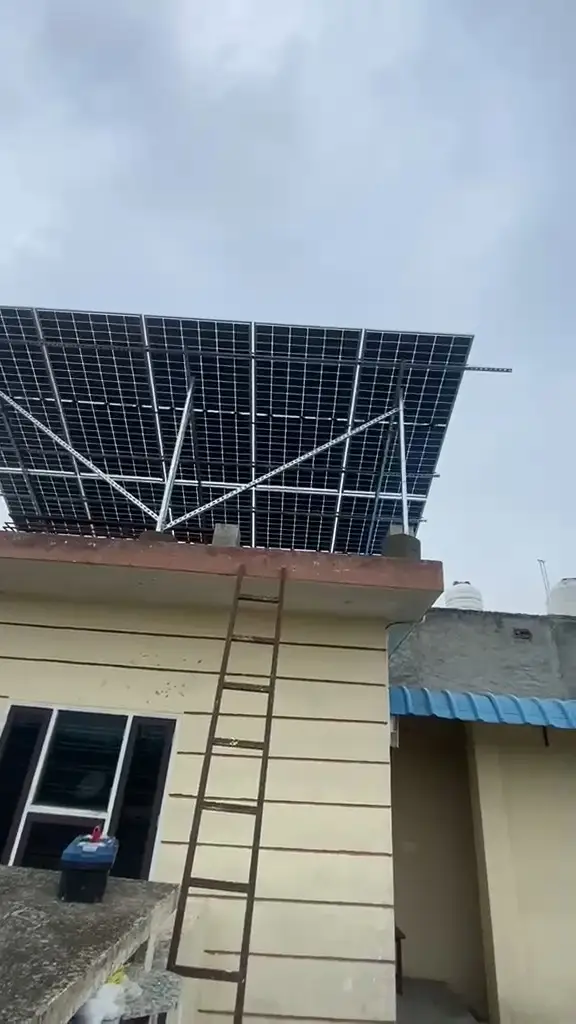
What to send us for a tighter range this week
- Your latest bill and sanctioned load.
- Clear photos of the roof from two corners, plus a sketch with rough sizes.
- A note on whether you want on-grid or hybrid, and whether you will apply for the PM Surya Ghar subsidy.
We will size using about 135 units a month per kW, check roof area at about 100 sq ft per kW, and keep the system within your sanctioned load. We will share a range first, then lock it after the site check. Product warranties are the manufacturer’s, on their terms.
If you also plan backup, read our hybrid systems guide and, for AC loads, see whether a 5 kW hybrid can run two 1.5 ton ACs. If you want to track usage and export after installation, keep our guide to reading your meter and bill handy.
We install and supply UTL Solar from Phase 8B, Mohali, since 2022. Send the bill and photos, and we will give you a clear range you can use to decide.
Questions we are asked
Why do two installers quote very different amounts for the same size?
Size is only part of it. Roof access, structure, cable runs, DCR and ALMM panel choice, on-grid vs hybrid, and BOS parts change the price. We quote as a range until we see the site.
Does the PM Surya Ghar subsidy reduce my invoice?
No. The subsidy is paid into your own bank account 30 to 45 days after the DISCOM inspection. It never comes off the invoice and it never goes to a lender or an installer.
Can I fix the size myself from my bill?
Yes, start with our planning figure of about 135 units a month per kW, then check roof and sanctioned load. Use our [calculator](/solar-calculator/) and see [how to size](/blog/how-to-size-home-solar-punjab/). We confirm on a site visit.